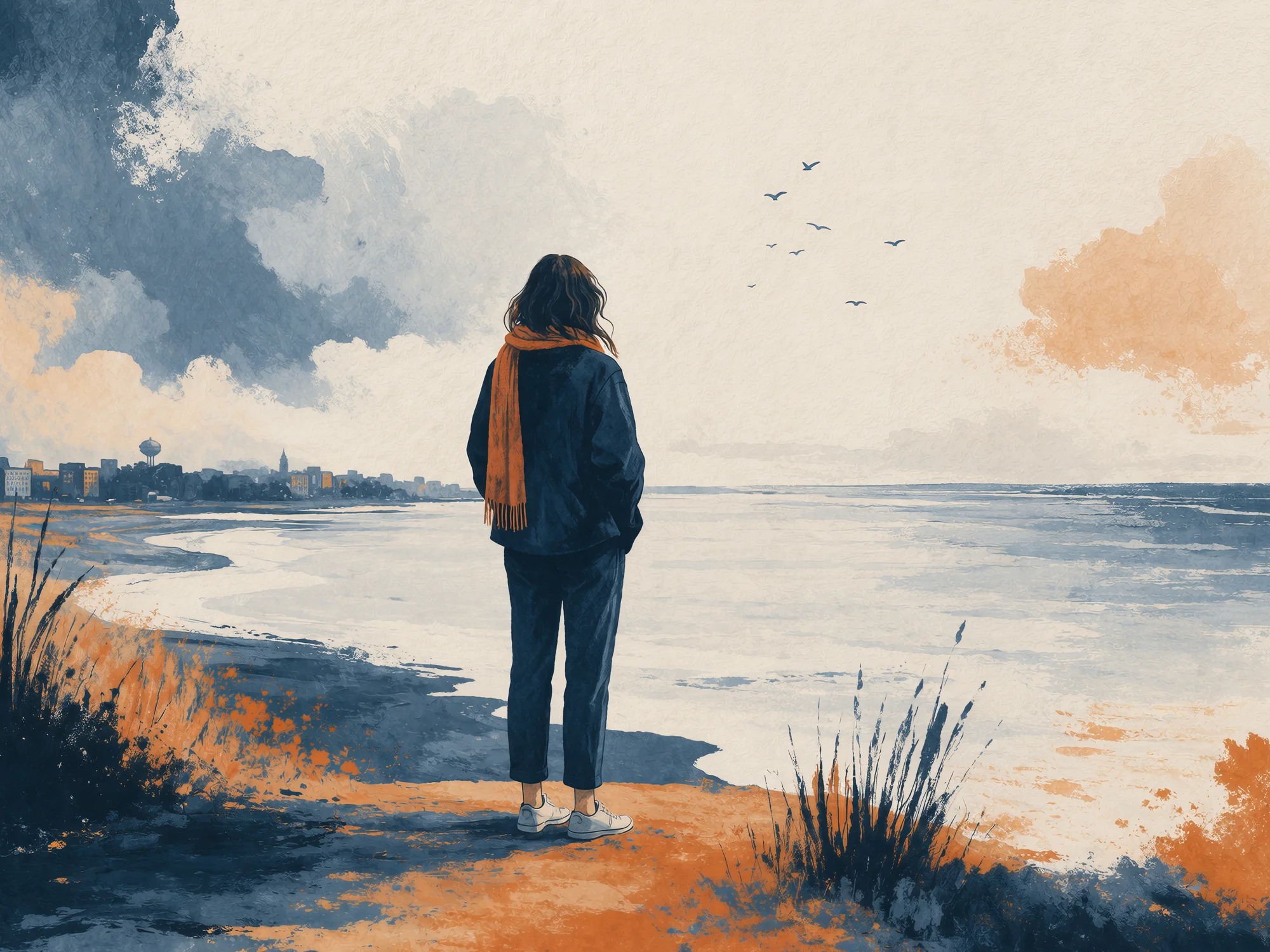
There’s a point people reach where something needs to change.
They’re not in immediate crisis, but they’re not steady either. They’re getting through the day, but it takes everything. Sleep is off. Focus is off. The same patterns keep showing up, even when they understand why. And at some point, the question becomes: what actually helps from here?
In many parts of the country, mental health care does exist. But the right level of care isn’t always clear, or easy to find.
That’s especially true in Wilmington, North Carolina, where that hasn’t always been easy to figure out.
When the Next Step Isn’t Close Enough
Across the country, roughly 40% of people live in areas with a shortage of mental health professionals. In North Carolina, that gap becomes more visible. In some areas, a single provider may be responsible for thousands of individuals.
As we spent time in Wilmington, one pattern came up quickly. When the need goes beyond weekly therapy, but doesn’t require stepping away from life entirely, there isn’t always an obvious next step.
This is where Intensive Outpatient Programs (IOP) come in, with several hours of therapy built into each week so people have more time to practice new ways of responding, while still staying connected to their daily lives.
While programs like this exist in cities like Raleigh or Charlotte, distance becomes a different kind of barrier when care requires showing up several times a week. What doesn’t seem far on paper starts to breakdown in practice, and over time, consistency becomes harder to maintain.
Stepping Into the Gap
This is the gap Sanare is stepping into in Wilmington.
Sanare is now working with individuals through individual and group outpatient therapy, meeting people where they’re ready to start.
At the same time, we are preparing to offer specialized IOP tracks designed for needs that have been harder to match locally.
This includes Trauma-Focused IOP, built for individuals carrying experiences that continue to show up in how they think, feel, and respond, even when they understand where it comes from. This work creates space to process what’s been carried while also building the ability to stay present and respond differently in real time.
It also includes DBT-Focused IOP, designed for individuals navigating emotional intensity, self-harm, chronic suicidal thoughts, or patterns in relationships that feel hard to break. This work is consistent and skill-based, helping people slow things down, recognize what’s happening in the moment, and choose a different response when it matters most.
Why Wilmington, and Why Now
Wilmington’s population has grown by roughly 12% since 2020, with more individuals and families continuing to move into the area each year.
Growth doesn’t just change the size of a community. It changes what’s needed to support it. And right now, parts of that system haven’t fully caught up. As more people move in, the demand for mental health care continues to rise. But access, especially to the right level of care, doesn’t always expand at the same pace.
That gap is where the work has to change.
At Sanare, the work is built on a simple belief: real change doesn’t happen through insight alone. It happens through consistency, connection, and the ability to practice something different while life is still happening.
That’s why IOP has always been central to how we work. Not just as a level of care, but as a structure that gives people enough support to stay engaged, while creating space to apply what they’re learning in real time.
That work is carried by Sanare therapists who are trusted to bring their full selves into it. Guided by a clear structure, but responsive to what’s actually happening in the room, using creativity, honesty, and connection to help the work land in a way that actually sticks.
Sanare has expanded into North Carolina, first in Raleigh, and now into Wilmington. Not as a matter of growth for its own sake, but because the need is clear.
What This Expansion Represents
Sanare’s move to Wilmington is not about geography. It is about alignment between what people are experiencing and the level of care available to support them.
At Sanare, the goal is not just to provide care. It is to provide care that fits into real life. Care that people can show up to consistently. Care that builds something usable outside the room. Care that helps people respond differently when life inevitably gets hard.
Most people are not looking to pause their lives. They are trying to figure out how to move through them with more steadiness, more clarity, and more control than they’ve had before.
That’s the kind of work Sanare is built to support.
More Insights
IOP in Wilmington, NC: When the Right Level of Care Is Hard to Find
April 3, 2026

IOP in Bucks County, PA: Trauma & DBT Programs in Doylestown and Yardley
March 18, 2026
What Is Trauma Bonding? Signs, Causes, and How to Break the Pattern
March 3, 2026
Finding “Therapy Near Me”: A Practical Guide to Mental Health Support
February 13, 2026

Ways to Spend the Holidays Alone in PA, DE, & NC

Spending The Holidays Alone vs. With Family
December 23, 2025
.jpg)
The Holiday Survival Guide: Therapist Tips for When Family Gets Stressful - Pennsylvania, Delaware, & North Carolina Edition
December 11, 2025

How to Deal with Anxiety at Work | Sanare - Your Pennsylvania, Delaware & North Carolina Therapist
November 5, 2025
Why Do I Get So Angry Over Little Things?
August 18, 2025

10 Celebrities Who Make Mental Health Conversations Feel Normal (Because They Are)
July 30, 2025
“Who let me be an adult?” Overcoming Imposter Syndrome
July 1, 2025

Overstimulation 101: Why everything feels too loud (and what to do about it)
May 29, 2025

Worried you’re a bad parent if your teens struggling with their mental health? This will free you from that guilt
March 17, 2025

The parent's guide to finding a therapist who actually gets your teen
March 31, 2025

Podcast episode: What your teen's NOT saying (but desperately needs you to hear)
February 20, 2025

Why your teen's always stressed,—and what you can do about it
February 6, 2025

Teen mental health help: what to do when your kid's not okay (and won't say it out loud)
January 21, 2025

Which type of therapy do you actually need? (A no-BS guide)
January 14, 2025

Holiday depression: when "merry & bright" feels like a lie
December 11, 2024

What’s the best therapy for depression? Here's what'll move the needle
November 1, 2024

How often should you go to therapy? (Spoiler: it's not just once a week)
September 27, 2024

What’s the best kind of therapy for childhood trauma?
September 11, 2024

7 subtle signs your teen's not okay (that are easy to miss)
February 4, 2025